
We are living through a communication crisis disguised as a productivity boom. In 2026, we have more tools to talk to each other than at any point in human history. We have Slack, Teams, Zoom, holographic presence, asynchronous video, and AI agents that can draft entire email threads on our behalf. Yet, somehow, true connection feels harder to achieve. We are drowning in “content” but starving for “context.” We are “connected” to everyone but understood by few. The paradox of the AI age is that as machines become better at mimicking human language, the premium on actual human connection has skyrocketed.
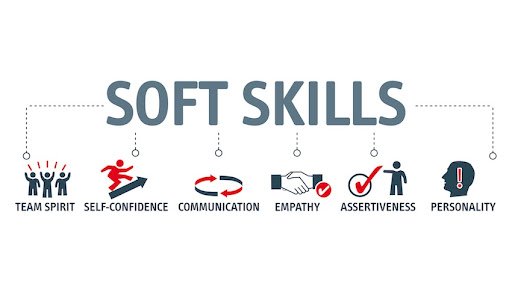
For the last decade, communication was often treated as a “soft skill”—a nice-to-have bonus for managers. Today, it is the single most critical “Hard Skill” for career survival. In a world where an AI can write code, generate financial reports, and diagnose medical scans, the only thing it cannot do is build trust. It cannot navigate the messy, emotional, political reality of a human organization. It cannot look a client in the eye (even virtually) and make them feel heard. It cannot rally a disheartened team.
This guide is not about how to write a better email or how to speak in public. It is about the fundamental rewiring of how we collaborate in a hybrid, AI-augmented world. It is about moving from “transmitting information” to “architecting understanding.” If you want to thrive in 2026, you must stop viewing communication as a task you do on top of your work, and start viewing it as the work itself.
Part 1: The Asynchronous Revolution and the Death of the “Quick Chat”
The most significant shift in workplace dynamics is the move from “Synchronous Default” to “Asynchronous Default.” In the old office, if you had a question, you tapped your neighbor on the shoulder. In the remote world, you sent a Slack message. But in 2026, with global teams spread across 12 time zones, expecting an immediate response is a recipe for burnout. The modern professional must master Asynchronous Fluency.
This means shifting your mindset from “talking” to “writing.” Writing is no longer just for documentation; it is the primary mode of thinking. When you write, you are forced to clarify your thoughts. You have to structure your argument, anticipate objections, and provide context. This is what we call “Low-Context Communication.” In a high-context culture (like a physical office), you can say “Check the thing,” and your colleague knows what you mean because they saw you working on it. In a low-context digital world, “Check the thing” is useless. You must write: “Please review the Q3 Budget Spreadsheet (Link), specifically Row 45 regarding the marketing spend. I need to know if we can approve this by Tuesday.”
Mastering this requires a new set of tactical skills. First, the “BLUF” (Bottom Line Up Front) method. Never bury the lead. Your first sentence should state exactly what you need and by when. Second, the “Visual Brevity” discipline. No one reads walls of text. Use bullet points, bold text for key metrics, and numbered lists. If your message takes more than 30 seconds to scan, it will be ignored. Third, the “Loom Video” habit. Sometimes text is too cold or complex. Instead of calling a 30-minute meeting to explain a dashboard, record a 3-minute screen-share video. Walk through the data, explain your nuance, and send the link. Your team can watch it at 2x speed, rewind the complex parts, and reply when they are ready. You have just bought back 27 minutes of productivity for everyone.
Part 2: The “Third Teammate” – Collaborating with Artificial Intelligence
Collaboration is no longer just human-to-human. It is Human-to-AI-to-Human. We are entering the era of the “Centaur Team,” where every human employee is augmented by a suite of AI agents. If you treat AI like a search engine—asking it questions and waiting for answers—you are failing. You must treat AI like a junior teammate.
This requires a skill we call “AI Orchestration.” You are the conductor; the AI is the orchestra. You don’t play every instrument; you direct the flow. When you assign a task to a human, you give them context, constraints, and examples. You must do the same for your AI agents. This is “Context Engineering.” Instead of saying “Write a marketing email,” you say: “Act as a Senior Product Marketer. Write an email to our ‘Churned Users’ segment. The goal is to get them to schedule a demo of our new feature. Use a tone that is empathetic but confident. Here are three examples of previous emails that performed well.”
But collaboration works both ways. You must also learn to “Audit and Elevate.” AI is confident but often wrong (hallucinations). You cannot blindly forward AI-generated work. You must review it with a critical eye, checking for bias, factual errors, and tonal inconsistencies. Your value is not in generating the first draft (the AI does that); your value is in the final 10% of polish—the strategic insight, the emotional resonance, the brand alignment. You are the Editor-in-Chief of your digital workforce.
Part 3: Digital Body Language and the Crisis of Presence
In a Zoom room of 20 people, it is easy to disappear. You can turn your camera off, mute your mic, and multitask while half-listening. This is the death of collaboration. In 2026, “Digital Presence“ is a currency. It is how you signal that you are engaged, that you care, and that you are leadership material.
We need to talk about “Digital Body Language.” In person, a nod, a lean-in, or a smile builds rapport. Online, these cues are flattened. You have to exaggerate them slightly to cross the digital divide. This means looking directly into the camera lens when you speak (not at the screen), which simulates eye contact. It means using the “Chat” function as a parallel channel of support—dropping a “Great point, Sarah!” or a “100%” while someone else is speaking. These “Micro-Affirmations” are the digital equivalent of nodding. They make the speaker feel heard and validate their contribution.
Furthermore, we must master the “Mute Button Discipline.” Silence in a digital meeting can be terrifying. Is the internet down? Are they angry? Are they thinking? You must learn to narrate your silence. “I’m just taking a moment to process that…” or “Let me look up that data point, give me ten seconds.” This prevents the anxiety of the void. Conversely, if you are a leader, you must get comfortable with “The Paused Wait.” After asking a question, wait 7-10 seconds. It feels like an eternity, but it gives introverts and remote participants time to unmute and formulate their thoughts. If you fill every silence, you crush collaboration.
Part 4: Conflict Transformation in a Hybrid World
Conflict is inevitable. In fact, in high-performance teams, conflict is desirable. It means people care enough to disagree. But in a remote or hybrid environment, conflict can quickly turn toxic. Without the softening effects of shared coffee breaks or casual hallway chats, a curt email can be read as an act of war. This is the “Negativity Bias” of digital communication: we tend to interpret ambiguous text as hostile.
The skill you need is “Conflict Transformation.” Notice I didn’t say “Resolution.” Resolution implies ending the conflict; transformation implies using the energy of the conflict to create something new. The first rule is “Escalate to Sync.” Never try to resolve a conflict via text or email. You lose tone, nuance, and empathy. As soon as you feel friction, move to a video call. Seeing the other person’s face reminds you they are human, not just an avatar.
Once on the call, use the “Steel-Manning” technique. Instead of attacking their argument (Straw Man), try to build their argument even stronger than they did. say: “If I understand you correctly, you are worried that if we ship this feature early, we risk destabilizing the backend, which would cost us more in the long run. Is that right?” When people feel understood, they lower their defenses. You move from “Me vs. You” to “Us vs. The Problem.” This turns a fight into a design session.
Part 5: Data Storytelling – The Bridge Between Logic and Emotion
We are drowning in data. Dashboards, KPIs, OKRs, analytics—we have it all. But data alone does not drive change. Humans are not rational calculating machines; we are emotional creatures who use logic to justify our decisions. The most powerful collaborators in 2026 are the “Data Storytellers.”
This skill is the ability to wrap raw numbers in a narrative structure. Do not just paste a chart into a slide deck. A chart says “Sales are down 5%.” A story says “We are losing our core customer because our competitor launched a faster feature, but we have a window of opportunity to win them back if we pivot now.”
To do this, use the “Freytag’s Pyramid” for business. Start with the Exposition (The current state: “We are stable”). Introduce the Inciting Incident (The problem: “A new regulation was passed”). Build the Rising Action (The data: “This impacts 40% of our revenue”). Reach the Climax (The decision: “We must choose Option A or B”). And finally, the Resolution (The future state: “If we choose A, we grow”). By structuring your data as a journey, you engage the brain’s narrative centers, making your argument memorable and persuasive.
Part 6: Psychological Safety and the Feedback Loop
None of this works if people are afraid. Innovation requires risk, and risk requires safety. “Psychological Safety” is the belief that you will not be punished or humiliated for speaking up with ideas, questions, concerns, or mistakes. In 2026, creating this environment is the primary job of any collaborator or leader.
You build this through “Radical Candor.” This is the concept of caring personally while challenging directly. It is not “brutal honesty” (which is aggression), and it is not “ruinous empathy” (where you are too nice to give bad news). It is the sweet spot where you say, “I’m telling you this because I want you to succeed, but your presentation today missed the mark because…”
To make this work, you must normalize the “Feedback Loop.” Feedback should not be a scary annual event. It should be continuous, lightweight, and bidirectional. Ask for feedback constantly: “What is one thing I could have done better in that meeting?” When you receive it, do not defend yourself. Say “Thank you,” and then act on it. When you model that receiving feedback is safe, you give permission for everyone else to be honest. This creates a high-velocity learning culture where mistakes are caught early and corrected quickly.
Part 7: Cross-Cultural Fluency and the Global Mindset
The workforce is global. You will likely work with colleagues in Mumbai, London, Tokyo, and São Paulo on the same project. Cultural misunderstandings are the silent killer of collaboration. In 2026, “Cultural Intelligence” (CQ) is a non-negotiable skill.
You must understand the difference between “High-Context” and “Low-Context” cultures. In low-context cultures (like the US or Germany), communication is explicit: “No means No.” In high-context cultures (like Japan or Brazil), communication is layered: “That might be difficult” often means “No.” If you miss these cues, you will push when you should pause.
You also need to respect “Time Zone Equity.” It is arrogant to assume everyone should work on your schedule. Rotate meeting times so that the pain of the late-night or early-morning call is shared equally across the team. Use tools to check local holidays before scheduling deadlines. Small gestures of cultural respect—learning how to pronounce a name correctly, acknowledging a local festival—build immense capital in a distributed team.
Conclusion: The Human Edge
As we look at the landscape of 2026, it is easy to be intimidated by the technology. The AI is faster. The algorithms are smarter. The data is deeper. But technology has a limit. It can process information, but it cannot create meaning. It can execute tasks, but it cannot build relationships.